LMC Media
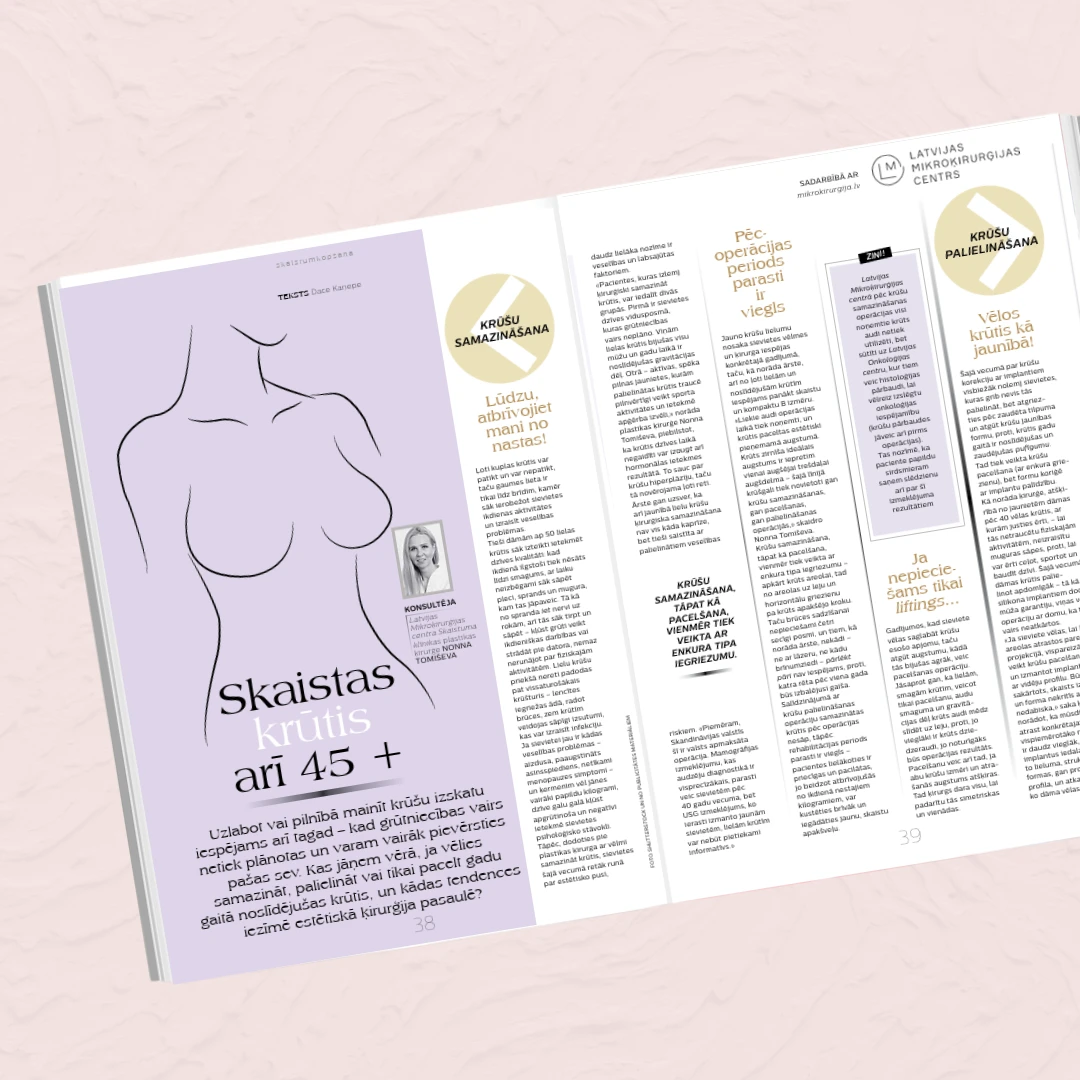
Beautiful Breasts Even After Age 45+
May 20, 2026
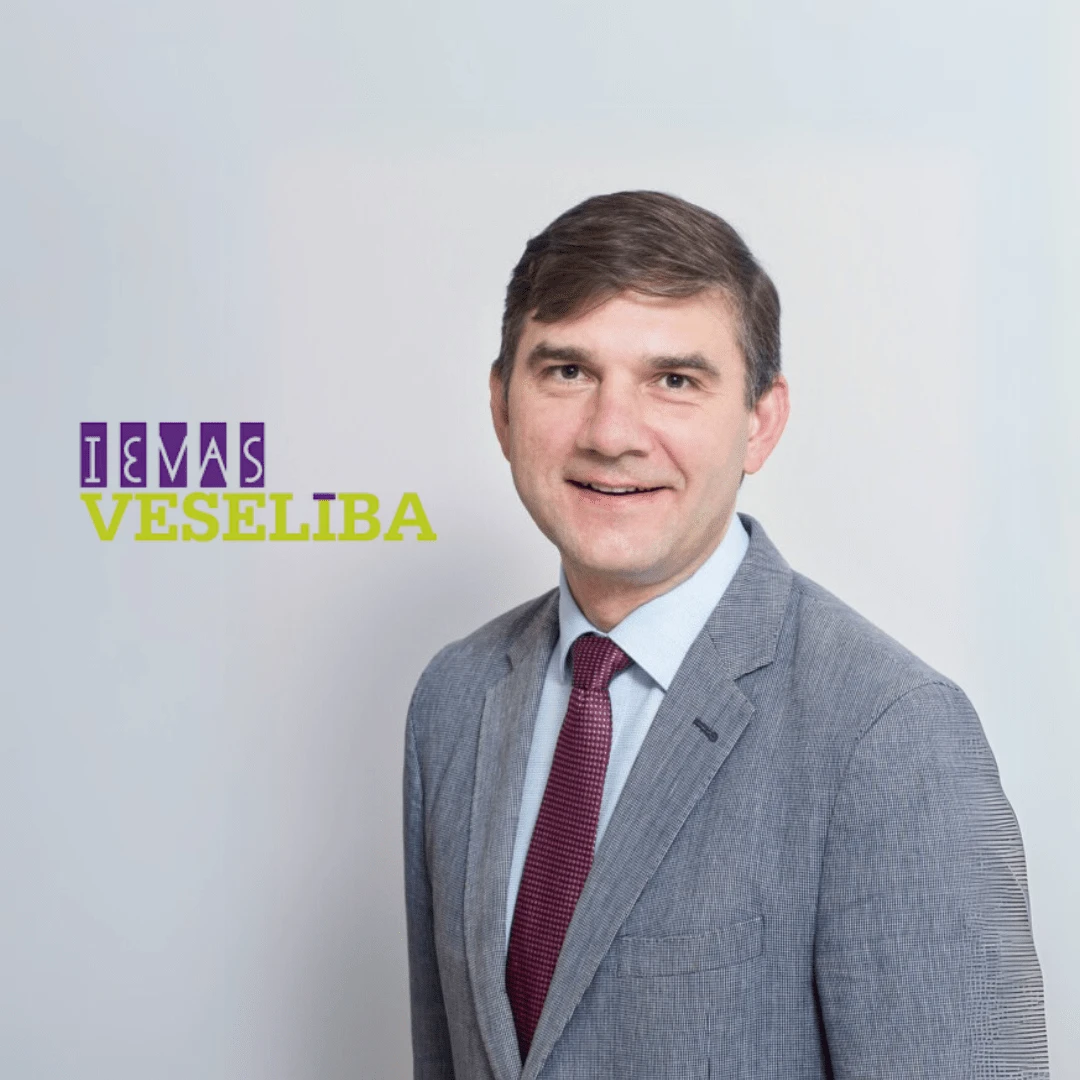
April 25 will mark exactly 25 years since he reattached his first finger, and, as the doctor himself says, «It’s no shame to perform a long surgery; the shame is in performing a pointless one without considering the patient’s life and functional ability after the surgery.»
– Doctor, tell me, what has been the best part of these 25 years on the job?
– Definitely my relationships with my colleagues. We have a wonderful team. During our residency years, of course, we spent more time with each other than with our families, but now it’s different—we each have our own surgeries and our own patients, yet we still collaborate and assist one another. And the fact that over the years we’ve been able to work well together and stick together has led to a successful outcome—we’re about to open the hospital.
– What is the glue that has kept you together for so long?
– Mutual respect, the ability to listen to one another—even though things haven’t always gone smoothly—25 years together is no easy feat. Sooner or later, one person may start to see themselves as better, smarter, more capable, and more productive, so it’s important to address any misunderstandings, hurt feelings, or potential wrongs in a timely manner, rather than bottling them up. Just like in a family. A work team is a kind of professional marriage, which, in the case of our center, has become truly strong and enduring over these 25 years.
We try, as much as possible, to pass on this spirit of camaraderie to our younger colleagues as well. Over the past five years, I’ve increasingly enjoyed the opportunity to teach residents. Young professionals need the chance to gain practical experience—to master their craft, build relationships, and learn to help and support one another. I am very pleased that our residents are curious, eager to learn and grow, and, moreover, know how to communicate with staff and patients; they are resourceful and capable of handling various organizational tasks that I neither particularly enjoy nor am good at.
– And what are the young people teaching you?
-A great deal. And on top of that, they energize me with their youthful vitality. Their curiosity and questions make my life richer and more varied. For example, if I were to go around seeing patients on my own, it would most likely be more of a routine task. But the residents, being right there with me, notice a lot of things and ask questions—is this normal? What does this indicate? In moments like these, I even feel a sense of purpose. (Laughs.) And then there are the times when we go out together to have fun, chat, and joke around. All of that brings me joy.
– When I walked into your clinic this morning, I saw a lot of patients…
– The pace of life and work is picking up. More and more people are seeking advice or help, and I truly want to help everyone. I’m forced to do more and more, but then at some point I have to realize—it’s all too much; I need to slow down. It’s a psychologically difficult task—saying no—but it has to be done; otherwise, I’ll burn out and disappear. Moreover, it’s hard to make the right decision about exactly who to say no to and what exactly not to do.
– You can't please everyone, no matter how much you'd like to…
– It’s something I’ve carried with me since childhood—the belief that I have to be able to do everything and be kind to everyone, which is why it’s always been difficult for me to set boundaries. On the other hand, it gave me opportunities—during my residency, if a doctor asked me to help with something or do a favor, I tried never to say no. My colleagues knew I was reliable and would keep my word. But we were all like that—including my colleagues Jānis Krustiņš and Mārtiņš Kapickis—we were on call for twelve or more 24-hour shifts a month. Now it seems almost impossible to believe that was even possible…
– When did you realize that it is, after all, important to set boundaries?
– My health starts to take a toll all of a sudden. I start having trouble sleeping, my blood pressure rises, everything starts to get on my nerves, and my back hurts. It’s like a roller coaster—up one moment, down the next. There are moments when I feel very clearly: if I keep going at this pace, I’ll harm not only myself but also my patients—I’ll make mistakes. But reduced activity means fewer consultations, fewer surgeries, which, of course, nobody likes. When I recover, the curve drops, but then it gradually rises again until the workload is back at its peak. It’s like that for almost all doctors—many put up with it, don’t speak up, until they break down, burn out, or become jaded and disinterested.
Now, of course, I know how to take better care of myself, but I still have a long way to go in that regard. It’s a never-ending struggle with myself. I’m always tempted to go easy on myself, to take the need to recharge my batteries less seriously, but in the end, I end up hurting myself again.
I’m glad that the new generation of doctors is living a healthier lifestyle. They don’t want to risk burnout or exhaustion, and they’re much more open and proactive about discussing their problems. In the long run, this will certainly pay off in the form of better health and greater productivity.
– Times and generations change…
For example, during my residency in Singapore, I had clear rules—I had to be at the hospital at all times as long as there was work to be done. This ensured maximum training opportunities, the chance to perform many surgeries, and the chance to treat a wide variety of patients. If a future doctor learns the profession only during formal working hours, his professionalism suffers—that doesn’t mean he’ll be a worse doctor, certainly not, but it will take longer for them to become a stable specialist who makes sound decisions and performs surgeries well.
– I recently saw a witty yet painfully truthful cartoon in which a doctor asks a patient where it hurts, and the answer is “reality.” What hurts you in the reality of your work?
– People have changed a lot over the last ten or twenty years. They’ve become very sharp-tongued, arrogant, and even rude. Often, I have to focus more on how not to upset, provoke, or anger a patient rather than on how best to help them. This is despite the fact that, in my opinion, I communicate respectfully and kindly. It takes a great deal of strength and energy, and it’s one of the causes of burnout.
My office is right next to the reception desk, and I can hear clearly what’s going on there. Sometimes patients yell and insult the receptionists, and often it’s not just verbal aggression but also aggressive behavior. There are even times when I have to step in to defend my colleagues.
A person who is so worked up and aggressive then walks into my office, and I can already tell—the consultation won’t go anywhere; there’s no way to help him, because whatever I say will fall on deaf ears anyway. The only thing I can do is try to calm them down and steer the conversation back into the bounds of politeness and normality. At moments like these, the biggest challenge is to maintain my composure—which, fortunately, I still manage to do—but I feel that my reserves of tolerance have been rapidly dwindling in recent years.
– Where do you think all this comes from?
– From the internet, where people are exposed to this unspeakably violent and disrespectful communication, this lack of social etiquette, they adopt these boundless conditions of virtual reality, getting used to them and taking them for granted in real life as well. The same thing can be seen in stores—a fundamental lack of courtesy, emotional intelligence, and empathy. I think we, as a society, have a great deal of work to do to prevent this behavior from escalating further. For example, in Australia, Singapore, or anywhere else where customer service is provided, you can see signs that read: «We will not tolerate rude behavior toward our staff; we will not allow our employees to be mistreated; in the event of unacceptable behavior, you will be asked to leave!» We, too, will not tolerate rude or disrespectful behavior toward our staff at our clinic.
– Aside from rudeness and disrespect, I think we’re also seeing a lot of know-it-all attitudes and patients lecturing doctors these days—isn’t that right?
– Of course, I can see this difference very clearly. Some patients are, from the outset, quite hostile toward the doctor; they aren’t open to cooperation and are suspicious. Twenty-five years ago, I could calmly explain to a patient: «It’s possible to reattach the finger, and the outcome should be good,» or «The finger is so severely crushed that even after surgery, you won’t be able to use it.» The patient understood and agreed. Nowadays, however, the response tends to be: «You don’t want to reattach my finger because you simply don’t want to!» If I say that I offer a 90% guarantee for the surgery, the response is, “That’s not good enough for me—I need a 100% guarantee!” Or, “Doctor, I read online that this method would be the best and most suitable for my case—why aren’t you offering it?” I ask, “What’s your source?” Silence. If the method were evidence-based and clinically proven, I would most likely know about it and use it, but patients sometimes have their own expert opinions.
There are also patients who try to pressure me into performing a certain procedure, such as a nerve block, knowing that I won’t do it. I tell them that three nerve blocks have already been performed this year; it’s clear that injections don’t make things any better—another dose of steroids could cause a tendon or ligament to rupture, or lead to adrenal gland problems, so don’t even ask—I won’t do it. The patient replies, «Fine, I’ll go to another doctor who’ll give me the shot!» And that’s exactly what happens.
– I guess it’s a relatively new skill that doctors have to learn these days—it’s not something that comes naturally to patients, is it?
– That’s the biggest mistake—giving in to a patient’s wishes. Listening and understanding—yes, but not giving in to them if they aren’t medically justified and acceptable. It’s a sign of professional maturity when a doctor can tell a patient: «You’re manipulating me right now, and I won’t accept that!» Young doctors are often afraid of losing a patient and want to do everything the patient wants. But you have to know how to say no to a patient, which isn’t easy. I’ve had cases like that myself… If I can’t reach an agreement with a patient, then it’s better to politely decline and not continue the treatment.
Furthermore, if a patient does not trust the doctor and is full of suspicion, the outcome will also be poor. An emotional connection is very important—the better the relationship with the patient, the more successful the outcome. If there is no trust, even relatively simple surgeries will encounter complications; conversely, complex cases can be successful if the patient trusts the doctor and believes in a positive surgical outcome.
– What helps in situations like these?
– Talking with colleagues helps. In a way, we’re each other’s supervisors. Every doctor has cases they can’t handle—at first, they think they have the situation under control, but then they realize they don’t.
Either they can’t cope psychologically and emotionally, or medically. A colleague can assess the situation more objectively and is better able to remain emotionally stable. This is very valuable—a doctor shouldn’t be ashamed to ask a colleague for advice, to admit when they’re at a loss, or to try to handle everything on their own at all costs.
– But—how do doctors even manage to cope with this constant stress and emotional strain?
– You have to learn to leave your emotions at the office. At first, I used to take my work home with me—reflecting on the day’s events, going over the most difficult patient situations in my mind, I couldn’t sleep at night and would wake up in a panic, afraid that I’d done something wrong during surgery. Over time, however, I’ve managed to distance myself from it all somehow—I currently see patients for over a dozen hours a week; I wouldn’t be able to handle it if I continued to live under such emotional strain.
Of course, there are times when things get tough. In those situations, you either have to deal with it on your own or ask others for help. I really appreciate that I have several friends who listen to me, with whom I can talk openly—they don’t just offer clichés, but honestly call things by their real names. At the clinic, Uldis Krustiņš, with his directness, is one of the best psychologists.
– I noticed a patient review on the clinic’s website: Dr. Tihonov changed my life…
– There are patients who come to me and say, «Doctor, you’re my last hope.» In such cases, a response I’ve borrowed from my colleague Mārtiņš Kapickis works perfectly: «I am not and cannot be your last hope; your last hope is Jesus Christ.» I must not give the impression that I am superhuman. Both the patient and I must keep our feet on the ground, and I must not mislead them or feed them illusions that I can solve all their problems. But, of course, my goal in every situation is to do everything in my power, honestly and professionally, in the patient’s best interest.
– Hand surgery, reconstructive surgery, and plastic surgery—which one is closest to your heart?
– I really enjoy hand surgery because I can not only perform the surgery but also help patients properly restore function and regain their ability to work afterward. Of course, a surgeon needs to spend as much time as possible in the operating room, but on the other hand, the more surgeries there are, the more patients there are to monitor and care for afterward. Patients need advice, and it’s important for me to see the results of my work, so I try to schedule as many postoperative follow-up appointments as possible—at least a couple of consultations for each patient, and more frequently, of course, if there are complications.
– And cosmetic surgery—is its rise to prominence justified and warranted?
– We’re living in the myths of the Soviet era, when plastic surgery didn’t exist. As if it were bad and undesirable, wrong, and even reprehensible. Cosmetic surgery is evolving and improving—over the past 10–15 years, much has been done to make these procedures less dangerous and result in fewer complications. Moreover, if a patient looks and feels better as a result of the surgery, why not do it—especially if it’s a relatively low-risk procedure?
For example, a woman comes to see me whose eyelids droop over her eyelashes, obstructing her field of vision. After the surgery, she no longer has to suffer from this functional problem; she also looks younger and is happier. Moreover, this is a procedure with a low risk and a small likelihood of complications. Of course, one must always strike a balance between what does not harm a person and makes them more aesthetically appealing, and what could potentially cause harm. Moreover, many procedures fall on the border between cosmetic and reconstructive surgery—including eyelid correction, tummy tucks, breast reconstruction, and others. The key is moderation, while carefully weighing the potential risks and benefits.
– You’re still seeing and operating on patients in Madona as well…
– Madona is my hometown; I have such a deep affection for this place. The waiting list is very long—some patients complain about it—but if I don’t go there, there won’t be a waiting list at all. Sometimes I even think to myself—why do I have to go at all? Maybe I should just give it up. But I know full well that there are quite a few patients who, in all likelihood, won’t travel any farther than Madona to see a doctor, and that makes me take this trip myself and see the local residents.
– And you also spend all your weekends in Madona…
– Yes, every weekend I go to Madona; it helps me recharge after long hours at work—both mentally and physically. When I head out to the countryside, I let go of all the stress and worries that have built up over the week and forget about them. I work in the woods, go for a run, take a sauna, play novuss, meet up with relatives and friends, and return to Riga feeling rejuvenated.
– What does running do for you?
– Running helps you discipline yourself, motivate yourself, structure your daily routine, and get more done by unleashing previously untapped energy levels. For example, today, by nine o’clock, I managed to run seven kilometers, advise my daughter on her research project, attend a seminar at Gaiļezers, and follow up with the patients who underwent surgery yesterday.
Right now, I run more for the process than for the result. I can’t give up running because of my brother, who runs 10 kilometers every day and 21 kilometers on Saturdays. I’m glad that my oldest daughter and my goddaughter, Alise, also run. That’s how we inspire each other and encourage one another to keep at it.
– What is your formula for happiness?
– Primāri – mana ģimene. Sieva, ar kuru esam kopā jau trīsdesmit gadus, abas meitas. Cilvēki, ar kuriem varu būt kopā, parunāt – draugi gan darbā, gan Madonā. Darbs ir ļoti nozīmīgs, taču medicīna nebūt nav vienkārša – var būt gan paša neveiksmes, gan dažādu ārēju faktoru radīts stress. Taču nedrīkst šo visu negāciju kopumu vilkt sev līdzi, tas ir jānoliek malā. Manuprāt, somi tāpēc ir paši laimīgākie, ka viņi to prot, prot dzīvot harmonijā un brīvi no stresa, spēj saskatīt un novērtēt ikdienas sīkās laimītes un priekus. Priecāties par katru labu lietu dzīvē – tas ir apzināts lēmums un izvēle. Esmu to mācījies no vecākiem.
For me, for example, it’s a great joy that both of my daughters have sung in “Knīpas un knauķi.” That those little ones have grown into beautiful singers with lovely voices. I’m happy that I’ve been able to follow their journey of growth and be a part of it.
People can generally be divided into two categories. Some believe that everyone else is bad and think about how to fight them. Others, on the other hand, think: »Yes, maybe everyone is bad, but what can I do to make things better for myself and for others?” My colleagues and I have always felt that we need to do something to make things better—better for ourselves and for everyone else. If we succeed, then it’s possible to capture that sense of happiness and meaning.”
MEDICAL HISTORY
• Microsurgeon, hand surgeon, and plastic surgeon at the Latvian Microsurgery Center. He also works at Riga East University Hospital, specializing in burn and peripheral nerve surgery. He also provides consultations twice a month and performs surgeries twice a month at Madona Hospital.
• In 2001, he furthered his education at Yale University’s Waterbury Hospital in the United States, and in 2005, at the Center for Hand and Reconstructive Microsurgery at the National University Hospital in Singapore.
• He became interested in microsurgery while in 7th grade, after reading an article on the subject in the magazine *Liesma*, and decided to pursue medical studies while still in elementary school.
• He has been married to his wife Daiga for 30 years. They have two daughters: Līva, who now lives in Zurich, and Marta, who is in 10th grade.
• I really enjoy running. A while back, I ran a marathon in Singapore, and just recently, I ran a half-marathon in Zurich with my daughter. I started running in 2001, when I was staying in Waterbury with Professor Kegi.
• He has danced folk dances—first in Madona, and later in Riga with the folk dance ensemble Dancis.
• Plants and maintains forests.
With my colleague and friend Mārtiņš Kapickis, Sandeep Jacob Sebastin, head of the Department of Hand and Reconstructive Microsurgery at the National University Hospital of Singapore, Aymeric Lim, Director of the National University Hospital of Singapore.
We always spend the Līgo holiday together—with my wife and daughters.
With my brother Juris, my goddaughter Alise, and her boyfriend Mārtiņš after the 2024 Riga Marathon.
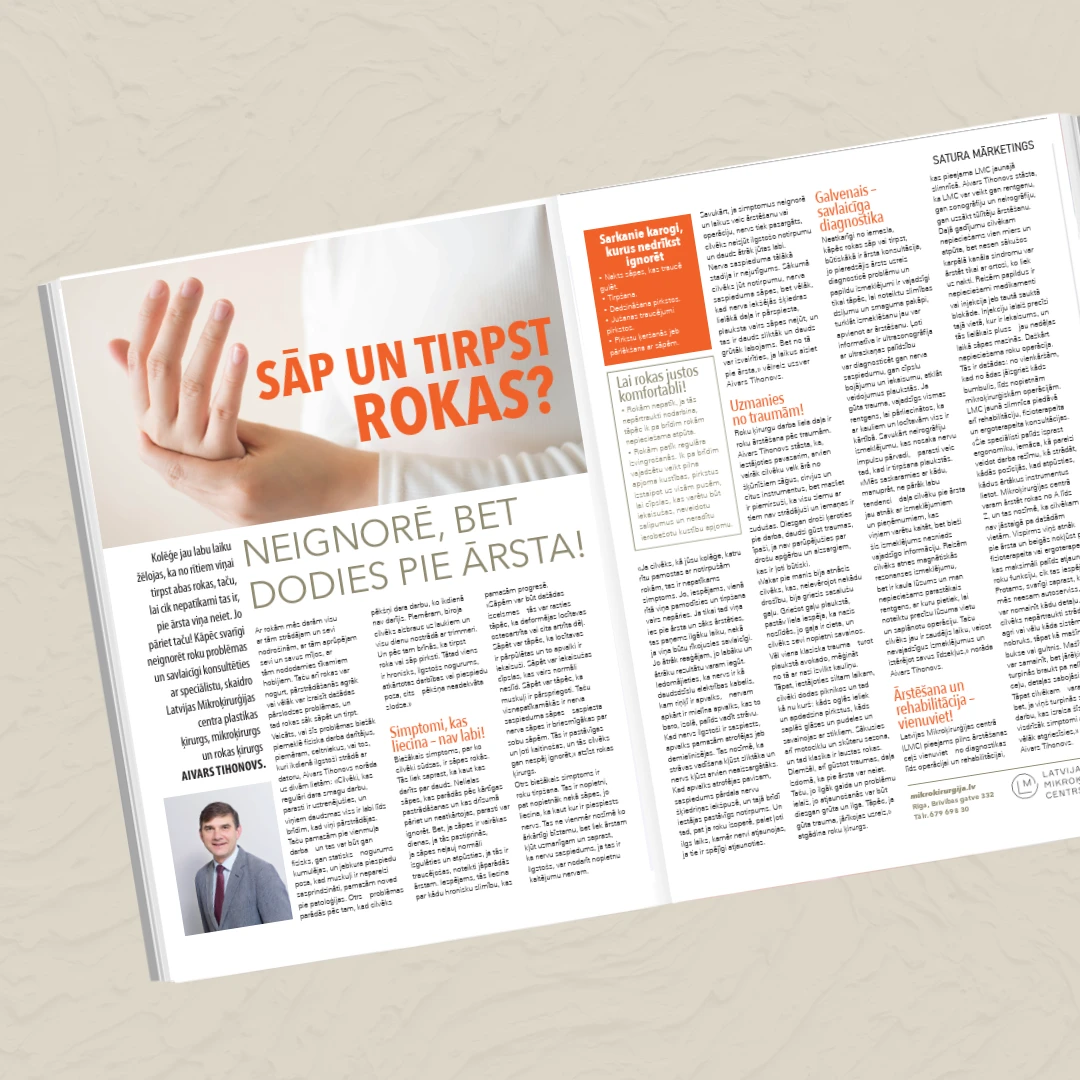
The magazine ‘Ieva’s Health.’