LMC Media
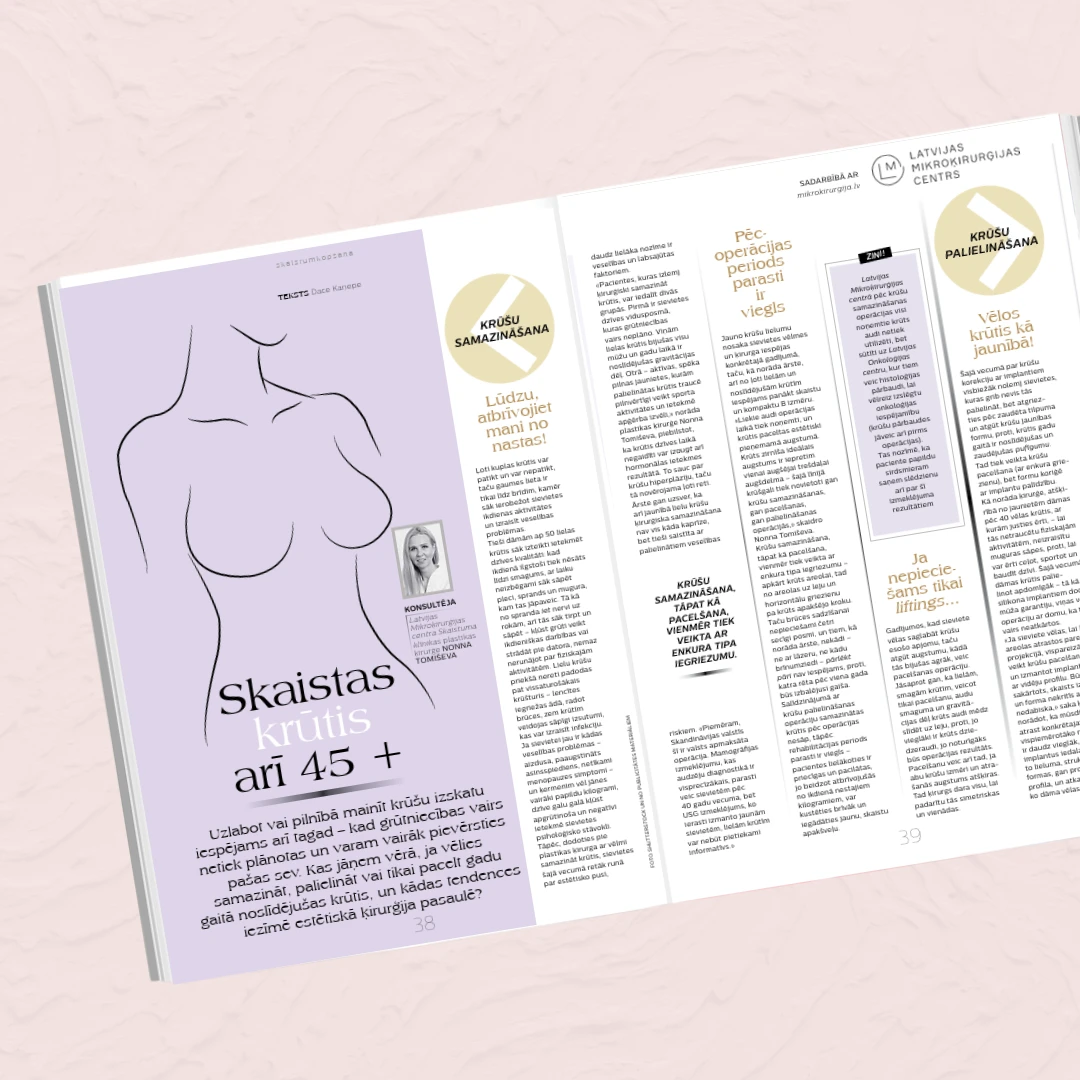
Beautiful Breasts Even After Age 45+
May 20, 2026

Often referred to as “nose surgery,” rhinoplasty is a plastic surgery procedure that literally means “to reshape the nose.” It can be performed to reshape and improve the appearance of the nose and, in some cases, to improve nasal breathing.
Since the nose is one of the main features of the face, it is important to choose a surgeon who has experience with this type of surgery, as well as a keen artistic sense of facial aesthetics —they must understand the aesthetics of facial proportions. Regardless of the primary reason for the procedure, the goal of rhinoplasty is always to achieve the most balanced and natural-looking result possible, while preserving or improving the nose’s function.
Cosmetic Rhinoplasty
A planned procedure that alters the structure and appearance of the nose for purely cosmetic reasons. It can be performed to refine the tip of the nose, narrow the bridge of the nose, remove bony protrusions, or reshape the nose or nostrils.
Cosmetic and Functional Rhinoplasty
When undergoing functional nasal surgery to improve breathing, many patients are interested in the possibility of improving the appearance of their nose at the same time. Cosmetic rhinoplasty is best performed in conjunction with other functional nasal procedures, such as septoplasty.
Reconstructive Rhinoplasty
A medically indicated procedure to repair or reconstruct the nose that has been damaged as a result of an accident, injury, or cancer treatment. It may also be recommended to improve breathing in people with a deviated nasal septum—when the cartilage separating the nostrils is altered or misaligned, causing partial obstruction of the nasal airways.
Revision Rhinoplasty
After rhinoplasty, an additional revision procedure (a second nose job) may be performed to further improve or alter the results of the initial surgery. Before undergoing a revision procedure, patients are advised to wait until the nose has fully healed and the swelling has completely subsided following the initial surgery.
Closed approach: a procedure in which all incisions are made inside the nose, where they are carefully concealed, resulting in no visible external scars.
Open approach: The procedure is performed by making a small incision across the columella—the skin and tissue at the base of the nose between the nostrils. The skin covering the nasal bones and cartilages is then lifted, providing the surgeon with access to the internal structures of the nose. After the procedure, the skin is repositioned, and the incision is sutured closed. The small incision typically heals very well with minimal scarring.
The time required for rhinoplasty will vary depending on the complexity of the procedure, the surgical approach (open or closed), and the techniques necessary to achieve optimal results. However, in general, patients can expect the surgery itself to last 2–5 hours. Complex cases and some revision rhinoplasty procedures may take longer.
Rhinoplasty surgeries are almost always performed on an outpatient basis at the Latvian Surgical Center. Most patients will be able to go home on the same day as the procedure, following a period of observation to ensure that they have fully recovered from the anesthesia.
After you are discharged home (usually on the same day as the procedure), you will be advised to refrain from any strenuous activities or exercise for at least two weeks to allow the nasal bones to heal and become more stable. You should avoid intense contact sports for at least six weeks. Patients should plan to take at least one week off from work, even if their job is not physically demanding. Additional symptoms that may occur include:
– Although pain and nausea are usually minimal, you may experience tenderness and/or pain during the first few days after surgery. Your doctor will provide you with pain medication to help manage any discomfort, although most patients find that they do not need it.
– You may experience a runny nose and/or a stuffy nose during the first few days—this is normal.
– Some bruising and swelling are to be expected, but they usually subside within a week to ten days. To reduce them, you can apply ice packs.
Your doctor will provide additional instructions on how to care for the surgical site, how to prevent infection, and when to schedule a follow-up visit.