LMC Media
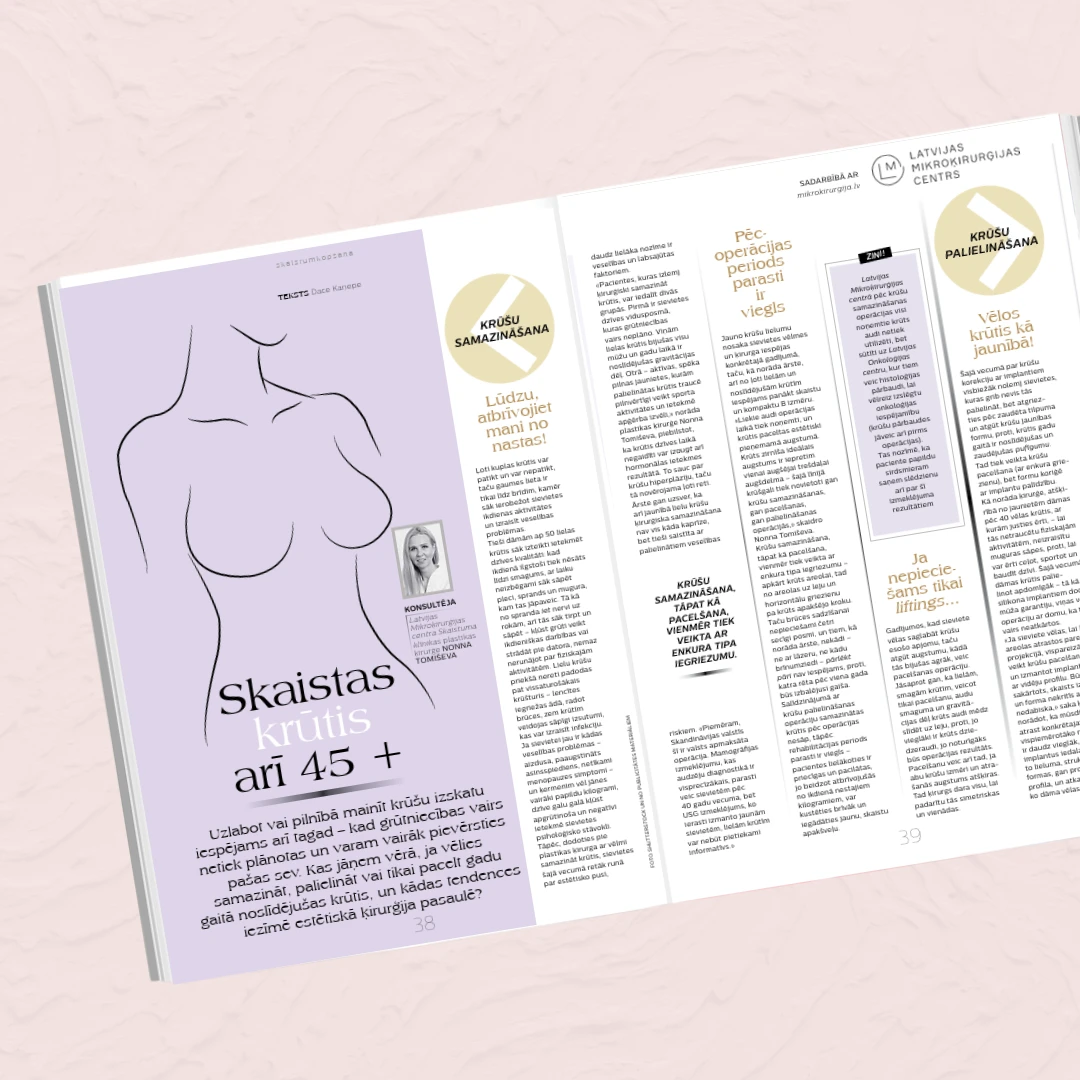
Beautiful Breasts Even After Age 45+
May 20, 2026
“It’s been 4 months and 9 days since I’ve been truly happy again, able to fully enjoy my hobbies of windsurfing and wing foiling without feeling any pain in my left hand.
We are incredibly grateful to Dr. Uldis Krustiņš and his colleagues for this!
So how did it all start? In early March, I accidentally fell on my left hand, injuring my wrist. It felt like I’d just sprained a ligament, and I thought the pain would subside. However, on the fifth day after the injury, I went to the hospital’s emergency room to make sure there wasn’t a fracture, since I was scheduled to leave for a windsurfing training camp in Dahab, Egypt, in a week.
Examinations were conducted at the hospital, which confirmed that no fractures were found in the wrist joint. The doctor recommended a week of rest, after which the pain should subside.
After this week, I was already at the training camp in Dahab to train fully in windsurfing and wing foil. Unfortunately, on my very first day on the water, I felt a sharp pain in my wrist. After every fall in the water, I had to painfully lift the sail to get back on the board. I could tell something wasn’t right, but I continued training because I had come here to train for two weeks.
When I returned home to Latvia, I had exactly two days until my next three-week trip to Nepal. My arm was in a lot of pain, so I tried to find a way to see a good specialist, a microsurgeon. I called the Latvian Microsurgery Center, where the administrator was very pleasant to speak with.
I explained my situation and was at a complete loss as to where to turn, because I had my long-awaited trek around Mount Manaslu, at an elevation of 5,106 meters, ahead of me.
The receptionist was very friendly and eager to help, but the earliest appointment she could offer with any of the doctors was in a month.
The stars aligned in my favor—while we were talking on the phone, a patient just canceled his appointment with Dr. Krūmiņš for the next day.
On April 5, I went to the Latvian Microsurgery Center for an appointment with Dr. Māris Krūmiņš. I was pleasantly surprised by the doctor’s professionalism—he listened to my story with deep understanding and was very kind and empathetic.
The only test results I had with me were the initial X-ray. After examining my left wrist, Dr. Krūmiņš said that a follow-up X-ray was definitely necessary, because very often microfractures can only be seen around the tenth day, and he suspected that there was, in fact, a fracture at the distal end of the ulna.
He also diagnosed a likely tear of the TFCC, but an MRI is needed to confirm this. If this diagnosis is confirmed, he will hand over the treatment to his colleague, Dr. Uldis Krustiņš.
Since I was scheduled to fly to Nepal the very next day, the doctor strongly recommended that I wear a wrist brace during the trip and make an appointment right away for all the checkups I’d need to have by the time I got back.
I was definitely left with a very positive and professional impression of Dr. Māris Krūmiņš.
After returning from my trip to Nepal, I went to get all the necessary checkups.
Unfortunately, Dr. Krūmiņš’s diagnosis was confirmed, and at the end of May I went to see Dr. Uldis Krustiņš.
Dr. Krustiņš pleasantly surprised me with his professionalism right from our very first meeting.
The first question he asked me was to describe exactly how the fall happened. At the same time, he opened all the test results on the computer and also performed a physical examination.
I vividly remember the moment when he opened the MRI report, read the first sentence, and at the same time pressed down on a specific spot on my arm, asking if it hurt. Since I said no, the doctor sighed lightly and said, “Well, this report is no good—the very first sentence isn’t even true! I don’t need to read any further!”
That made me realize I was in the hands of a professional. After examining the X-rays and MRI images, the doctor had a clear diagnosis—a fracture of the olecranon, or the bony protrusion at the end of the ulna, a tear in the TFCC cartilage, and, as a bonus, it turned out that the scaphoid bone wasn’t receiving proper blood flow.
Dr. Krustiņš explained to me how the surgery would proceed and what he would do during it. I felt as though he were in a completely different world, explaining complex matters so simply and with such enthusiasm. I realized that I could trust him completely and that I was in good hands. The surgery was scheduled for June 20 at the Gaiļezers Hospital.
The question on my mind was when I would be able to return to sports—since not only my hobby but also my job is related to sports. The prognosis wasn’t encouraging—six months.
On June 20, I arrived at the hospital for surgery. Before the surgery, the doctor measured the range of motion in my left wrist and explained once again how the surgery would proceed. Here, too, I was convinced of his professionalism.
That morning, I was the first one to undergo surgery. The operation began with some cool music playing in the background—chosen to the doctor’s taste—and at times he even sang along himself. That made me smile even more and lifted my spirits.
I was also happy to watch the surgery—specifically, the arthroscopy portion—on the screen. As I listened to the surgeon explain the procedure, I realized that he was very confident in what he was doing.
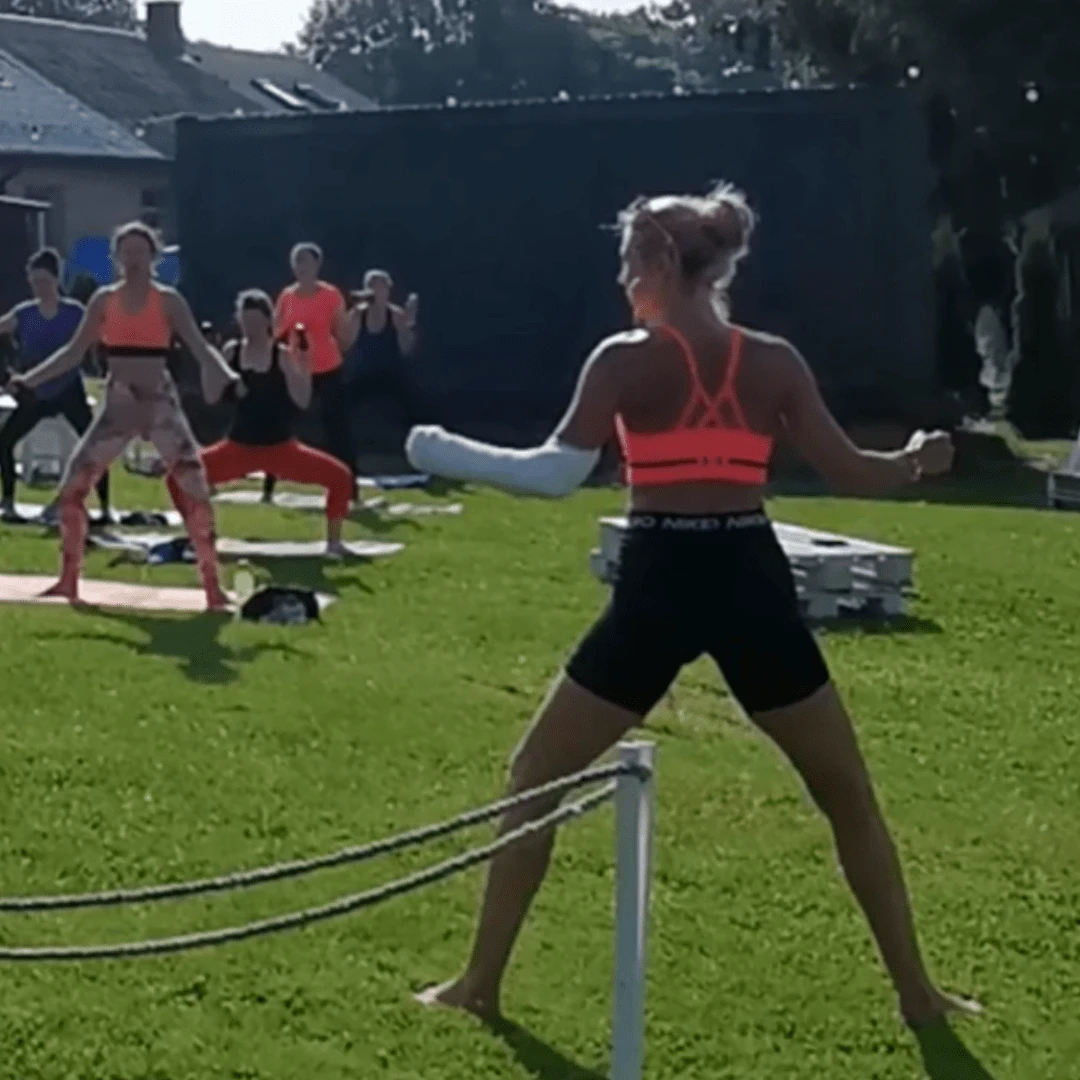
The ligament was sutured, a microfracture—or artificial fracture—was performed on the scaphoid bone to improve blood flow, and the fractured distal end of the ulna was secured to the ulna bone with wires. The surgery was successful, and for the following 6 weeks, I had to walk with two enormous splints—essentially a large cast—that encased the entire ulna and the base of the hand. It was predicted, however, that after 6 months, only the wires would be removed from the bone.
My goal was to return to my normal daily routine as soon as possible. During this time, I diligently followed Dr. Uldis Krustiņš’s recommendations, while also listening to my own body—even though I wasn’t allowed to start exercising my arm under an occupational therapist’s supervision until 4–6 weeks later, I sensibly continued my workouts, including water aerobics and SUP training, and slowly began to train my upper arm muscles as well, so that my arm wouldn’t lose its functionality entirely. I also found a way to continue my SUP activities during the summer. Of course, I set one rule for myself: no sharp pain and take it easy.
A little less than 6 weeks after the surgery, I went for a follow-up visit with Dr. Uldis Krustiņš. My recovery was going according to plan.
I was also ready to continue my rehabilitation with occupational therapist Dr. Diana Bringina. I’d like to commend the doctor’s professional approach to rehabilitation—her very gentle, thorough guidance and our collaborative work helped me regain my range of motion even faster. If you diligently and conscientiously follow the doctor’s instructions and exercise your arm regularly, you can return to your normal daily routine much sooner.
I really came to realize this because my desire to return to sports was so strong, so every day I exercised my arm, tried to listen to my body as much as possible, and did everything I could to speed up my recovery.
I’ll admit, these past few months haven’t been easy, because I had to spend a long time during the summer and SUP and water sports season walking around with a huge cast, then with a brace, all while constantly doing exercises for my hand. These limitations on my movement were very significant for me, since my daily work requires full functionality of my hand.
At first, I also had to get used to the fact that I had “foreign objects”—that is, wires—in my hand, because for the first two months, I felt like I wanted to get them out of my hand as soon as possible.
Until mid-September, I met periodically with Dr. Krustiņš and Dr. Bringins. At the same time, I continued to exercise my hand, following the doctors’ instructions and listening to my own body. By the end of September, Dr. Uldis Krustiņš, after measuring the range of motion in my wrist joint, confirmed that I was making good progress and that we could remove the wires on October 14. That was great news, as it was two months earlier than originally planned.
I have to admit, I was really looking forward to this day! On October 14, Dr. Uldis Krustiņš performed a minor procedure to remove a wire from my wrist joint. I was able to follow the entire procedure because the anesthesia was limited to the base of my wrist.
I was able to see the surgery unfold in the reflection of the operating lamp—personally, it was the most interesting thing I’ve ever seen, and I’m also grateful to Dr. Krustiņš for letting me watch and for explaining what was being done.
After the first surgery, I was left with a fairly large scar, but when I had this surgery, the doctor himself told me that he would make the scar smaller and more attractive so that it would look better. I really appreciate that! And it further strengthened my confidence in Dr. Uldis Krustiņš’s character, professionalism, and his ability to make the right decisions.
I have seen various doctors and been treated for various injuries, but I can say without a doubt that Dr. Uldis Krustiņš is the right person for the job and a true expert in his field.
Today is October 29, two days after my stitches were removed following my last minor surgery, and four months and nine days since my major surgery.
I'm currently in Dahab, Egypt, and I can’t put into words how wonderful it feels to be back on the water, doing what I love—wing foiling in strong winds—when I can hold the wing in my hands again, fall into the water, get back up, sail, and my wrist is stable and doesn’t hurt!
A huge thank you to Dr. Uldis Krustiņš, an outstanding professional in the field, and his colleagues!
”We can be proud that microsurgery of the hand in Latvia is at such a high level and that we have such specialists in the field."
With sincere respect and gratitude,
Health and fitness specialist and water sports enthusiast
Santa Veinberga