LMC Media
Beautiful Breasts Even After Age 45+
May 20, 2026


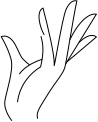
The hand consists of the wrist joint, the base of the hand, the palm, and the fingers. The bones of the hand are connected by joints, while the muscles that move the hand and fingers are located in the forearm and the hand. The muscles of the forearm have long tendons that, together with nerves, pass through tunnels or canals. Physical overexertion, injuries, and inflammation can disrupt the functioning of this mechanism, causing discomfort and pain.
Narrow channels run through the wrist, through which nerves pass. For various reasons, these nerves can become compressed, causing numbness, pain, and disturbances in skin sensation and movement. Most commonly, nerves are compressed at the base of the wrist, where the carpal tunnel is located; this tunnel contains not only the nerve but also the tendons that flex the fingers. When the hands are used intensively, the tendons thicken and compress the nearby nerve. This also occurs following hand injuries, such as a radius fracture, when the carpal tunnel narrows due to bleeding and scar tissue. “Patients complain of numbness in the thumb, index finger, or middle finger, which is very bothersome, especially at night when they are forced to get up to shake out or stretch their hand. Due to the compression, numbness and pain occur in the area innervated by the nerve. The most common causes are overuse from heavy physical labor, as well as arthritis and joint deformities, which cause the canal to narrow from the outside,” explains Aivars Tihonovs, a hand surgeon at the Latvian Microsurgery Center. Various diseases can also contribute to the development of carpal tunnel syndrome, such as diabetes, hypothyroidism (underactive thyroid), and rheumatoid arthritis. Women often complain of numbness in their hands during pregnancy and menopause, when hormonal changes and swelling occur. If you notice these symptoms, you should see a doctor and undergo a nerve conduction study to determine nerve conduction ability and the extent of damage, as well as to begin treatment.
If the fourth and fifth fingers of your hand feel numb or painful, or if discomfort—such as pain or a tingling sensation—is triggered by touching or gently pressing the area around the elbow, this may indicate nerve compression at the level of the cubital canal. If these symptoms are ignored and you do not see a doctor, a loss of strength in the hands may eventually develop (the ulnar nerve also innervates the intrinsic muscles of the hand, which are responsible for proper hand grip and strength). Over time, these muscles atrophy, leading to a deformity of the hand, and the hand can no longer function properly—for example, to hold objects.
In both cases, physical therapy methods are used first; it is recommended to wear a wrist or elbow brace at night, and steroid injections or nerve blocks are administered, but in more severe cases, surgery is necessary.
If, when bending your fingers, you feel pain at the point where they meet the palm, or if they tend to “lock up,” and you cannot fully bend or straighten them, the patient may be suffering from stenosing tenosynovitis, which most commonly affects the fourth, fifth, and middle fingers. “When moving the finger, it bends with a painful click and gets stuck. This is because the tendon that bends it slides through a tunnel. Due to inflammation, a nodule forms on the tendon, so it struggles to pass through the narrow tunnel but then suddenly “pops” out of it. Then the knot expands again and gets stuck,” explains the hand surgeon. “This mechanical blockage can be resolved by reducing inflammation, for example, by injecting steroids into the tendon sheaths, using medications that relieve pain and reduce inflammation and swelling, performing special stretching exercises, or wearing a brace. Minor surgery can also be performed. During the procedure, a small incision is made in the skin and the ligament restricting finger movement is released. If the patient sees a specialist within six months of the first symptoms appearing, conservative treatment is sufficient in 80% cases.
Aivars Tihonovs says that in men—and less commonly in women—the fingers—usually the fourth— though the condition can also affect the middle and other fingers—begin to contract very slowly and gradually, and hard soft-tissue nodules form in the middle of the palm. This is how Dupuytren’s disease manifests; as it progresses, a contracture develops that prevents the fingers from being straightened. The palm contains a layer of connective tissue, or fascia, that separates the skin from the nerves, blood vessels, and tendons. For reasons that are still unknown—though the condition is most likely hereditary—small nodules form where the fascia thickens, the skin of the hand tightens, and the fingers become deformed. “Connective tissue strands form beneath the skin; as they interconnect, they pull the finger into a contracted position. It is very important for patients to see a hand surgeon in a timely manner—as soon as they are unable to place a straightened hand flat on a table—before the finger is completely pulled into the palm. The more the finger is contracted, the more complicated the surgery and the longer the rehabilitation period,” the doctor warns. Various methods are used in treatment. In the early stages, massage and stretching may be used, but the most effective treatment is surgery, during which the damaged fascia is removed and finger mobility is restored. Aivars Tihonovs notes that patients often consult a hand surgeon about various growths on the hand. Most commonly, these are ganglions, or hygromas, which can appear in both the wrist joints and the fingers. “The causes can vary, but they are usually due to microtraumas in the joint capsules, which cause joint fluid to be secreted in increased amounts through the joint capsule. Since the synovial membranes are not completely ruptured, the fluid accumulates in a small lump. When the hand is moved, pressure in the joint increases and the lump grows larger. ”If it is a common hygroma, the lump can be aspirated to remove the gel-like substance. If the lump recurs and causes functional impairment, it must be surgically removed,” he says. If the doctor is not entirely certain that the growth is benign, a tissue sample is sent to a laboratory for examination after surgery.
Pain in the wrist joint can be caused by traumatic or degenerative changes in the bones, joint, or ligaments of the wrist, as well as by what is known as De Quervain’s tenosynovitis —inflammation of the tendon at the base of the thumb. Patients complain of severe pain that interferes with daily activities. The cause is an inflamed tendon located in a very narrow tunnel, which prevents it from sliding normally. You should not delay in seeing a doctor—preferably a hand surgeon—because after six months the condition becomes chronic, at which point the only solution is surgery to cut the ligament that holds the tendon in place, the inflammation and pain are eliminated, and the other symptoms disappear completely.
The condition most commonly affects people whose work requires frequent use of the thumb and simultaneous bending of the wrist toward the little finger, for example, when washing clothes by hand or working with rotating machinery.