LMC Media
Beautiful Breasts Even After Age 45+
May 20, 2026
A hand surgeon once referred to June, July, and August—but especially May—as the “months of stupidity.” Exactly! Summer is, of course, a time of joy, sunshine, vacations, and good health, but all of that can be ruined by a moment of carelessness and a simple disregard for the laws of physics. The Latvian Microsurgery Center is very often the final stop for many reckless and careless people.
EXPLANATION: Dr. ULDIS KRUSTIŅŠ
A classic: Shall we go for a walk?
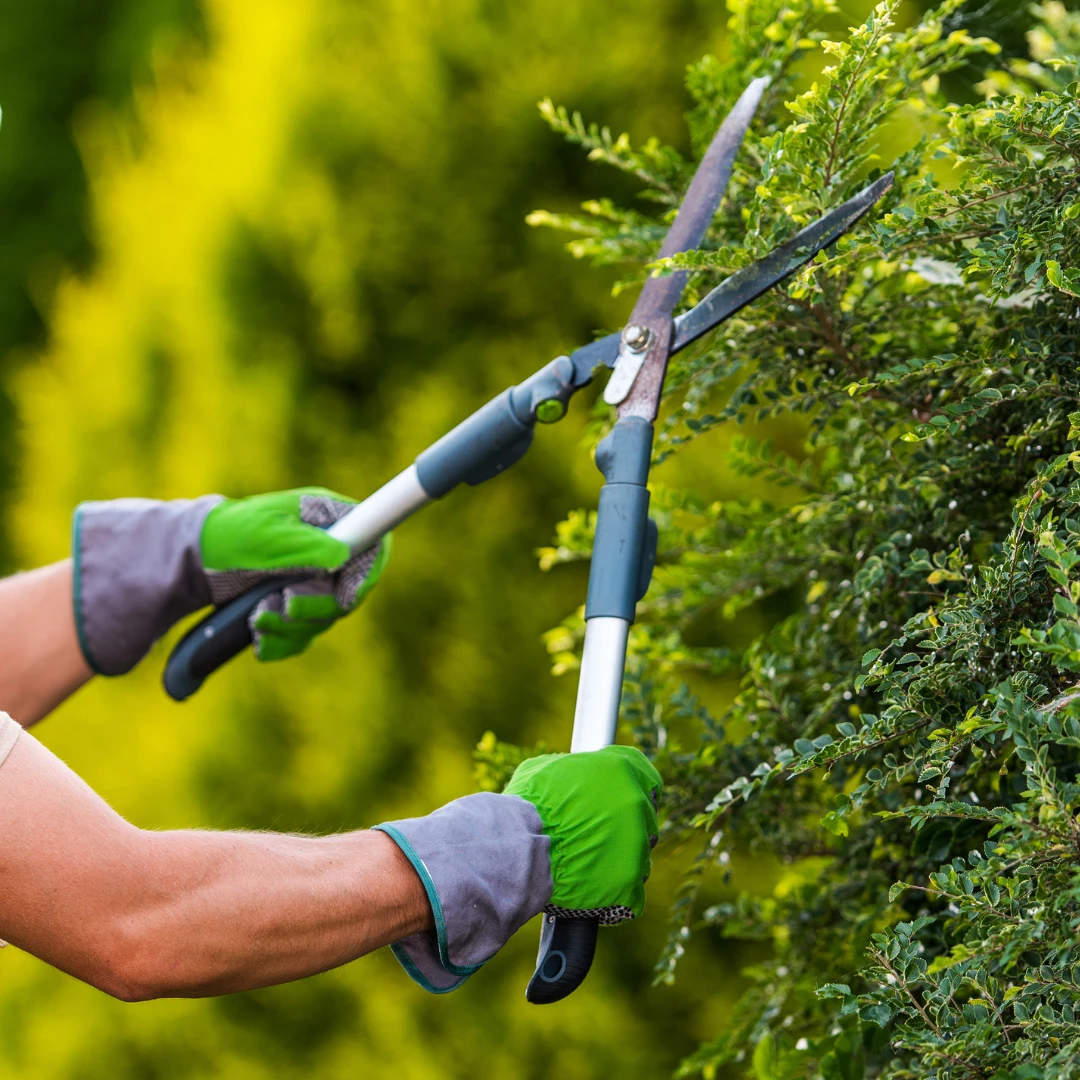
You should be especially careful when an older person who doesn’t normally do this suddenly expresses such a desire in your presence. A saw in such hands is a rather dangerous tool, because their hands are no longer strong enough; the saw jerks around and can injure both hands and feet. However, the most dangerous scenario is when someone, in complete disregard of all safety regulations, tries to mount a saw blade onto an angle grinder or a sander. Such actions should actually be prohibited by law! Or—we should require manufacturers to ensure that these two components are not compatible. But for now, everything remains the same: there’s always someone smarter than the tool manufacturers, and—as they say—the rules don’t apply to true masters. Consequently, it’s perfectly clear that real pros mount a circular saw blade onto a grinder, causing the tool to spin at such a tremendous speed that the saw blade bounces, and along with the branches, fingers also fly through the air. In the spring and summer, we regularly see patients like this with torn flesh and shattered bones. After such injuries, we are rarely able to restore the hand to its previous appearance. Most often, certain parts are lost, and instead of replantation, we must perform stump care.
If a finger has been cut off or severed…
Call the NMPD – 113!
If there is something to find, find it. If there is nothing to find, then the victim may not even need to be taken to Riga to see microsurgeons, because —if the sawed-off, cut-off, or severed body parts to be reattached have not been found, the amputation stump can also be treated at the nearest medical facility.
Do not do anything with the finger you found—do not soak it in alcohol or a disinfectant solution, and do not wash it. Wrap it in a dry cloth, then place it in a dry plastic bag, which you must tie tightly.
Put this bag into the other bag, which contains water with a few (!) ice cubes—just to keep it cool.
That's it—head to Riga! The rest is in the hands of the NMPD and the microsurgeons.
Lawn Mowers—Are They Really That Harmless?
At first glance, it seems—they’re so safe; the manufacturer has made sure that no one can stick their hands where they shouldn’t, and that the device will shut itself off in critical moments. But he seems to have forgotten about human stupidity… It’s a harsh realization, but that’s the one we’ve come to, and then we have to deal with crushed fingers and toes. Many have learned how to put these devices on their own feet—and on the feet of others!
During lawn mowing and grass cutting season, it’s essential to keep a close eye on children. This is especially true if parents are using small tractors on larger plots of land—they should always keep an eye out to make sure children aren’t nearby. Because every summer, someone gets injured this way. A number of injuries also occur when children are seated on a lawn mower tractor before reaching the specified weight at which it can be started—the sensors are deactivated. Or they’re even so foolish as to secure the seat in the upright position with electrical tape. The consequences? Once again, severed toes and desperate parents demanding that doctors do everything possible to piece their child’s mangled body back together.
The wrong order: alcohol first, then work
As soon as the weather is sunny, tools are used in combination with beer or wine, and this very often leads to something getting broken in the end. The guys get together: they’re about to cut something, chop something, and suddenly one or two fingers are flying through the air! I’m not against beer and wine, but I am against drinking beer while operating a grinder or a chainsaw. This isn’t about the harm of drinking alcohol, but about the inappropriate timing of when it’s done, as well as the amount consumed. Any hand surgeon who’s been practicing for years sees the same old trap that people keep falling into. I’ve spoken about this on television—on *Panorāma*, *Bez tabu*, and *Dr. Apiņš*—as well as on the radio and in the print media, and I’m not the only doctor who does so,
But apparently, it’s human nature to keep stepping on the same rake every now and then. Although it’s all relatively simple, my advice would be this: if you want to work outdoors, do so while following safety rules, and then in the evening you can calmly celebrate a job well done. Not the other way around—celebrate first and then work!
A large number of limb injuries in the summer occur while under the influence of alcohol.
If you are with someone who has suffered a serious injury
Stay calm as much as possible!
No tourniquets! Most bleeding can be stopped by applying pressure to the wound—even with a clean towel or piece of cloth. Apply a pressure bandage to the injured area. Call 113 and wait for emergency medical help! If the bleeding continues, press down harder on the wound and keep doing so until the paramedics arrive.
Note: Injuries caused by a saw are lacerations, and they don't bleed much. Cut wounds and fresh lacerations bleed more.
The surgeon will sew everything up!
That’s the saying, but it’s not true. You can sew on almost anything, as long as the parts fit together. The most devastating type of injury is a lacerated limb. For example, a wound caused by a rotating saw is not the same as an amputation by a guillotine. A finger severed by a guillotine can be sutured beautifully, but the situation is entirely different if the blood vessels have been torn out in chunks; in that case, the sutures are of lower quality, reattachment is less likely, and there’s a higher risk of thrombosis. Similarly, if a person has put their hand into an electric planer, not much of the limb remains, and there is nothing left to reattach. Or, if a person has sawed off a finger, cutting away most of the middle phalanx, it would be pointless to suture the distal phalanx—along with the entire nail—to the proximal phalanx, since these two parts do not fit together. Thus, the possibilities for replantation depend on how and by what the person was injured. In addition, one must factor in 2–3 months of rehabilitation, which involves a whole range of measures: specific immobilization—that is, the use of an additional splint at night to reduce the formation of contractures—plus intensive physical therapy, especially in the early stages when the wound has barely healed… All of this is to ensure that the sutured finger does not become stiff.
A Special Message for ADVENTUROUS WOMEN!
After winter, the ladies have settled into their gardens and are now overwhelmed with work. In a single day, they feel they have to prune all the dry branches, weed all the beds, and—by nightfall—their fingers start to go numb, their tendons swell, they experience a flare-up of carpal tunnel syndrome or a first-time nerve compression, or their tendons become inflamed, their fingers seize up—they wake up in the morning and can no longer straighten them… These are also the kinds of things we treat.
What can women do at home to help the cause?
First: if your hands start to go numb at night and become harder to move, you should wear a wrist brace to prevent the wrist from bending and compressing the nerve. Take any over-the-counter anti-inflammatory medication—such as ibuprofen or Dolmen. Rest is essential; the next day, you should avoid doing much with your hands so they can calm down and recover. If the numbness and pain do not subside after a couple of days, a corticosteroid injection between the tendons may be necessary to reduce the swelling. We know how this should be done properly. Do absolutely all doctors know this? Definitely not. Therefore, if you want to receive high-quality care, you should consult hand surgeons or—in the case of carpal tunnel syndrome—neurosurgeons as well. Some outpatient surgeons have been taught that the first thing to do in such cases is to administer steroid injections, but sometimes these are given too frequently and inappropriately, without a theoretical basis or even a diagnosis.
Reckless Motorcyclists
Another group of our summer season customers are superbike riders, who always see the Biķernieki track instead of the highway. These guys rarely drink, but their recklessness is equivalent to the distorted perception of reality caused by intoxication. Those who survive after losing control of their vehicles suffer multiple injuries—broken legs, backs, and arms—but the most serious injury is damage to the cervical nerve plexus. Later, these patients come to us with varying degrees of arm paralysis, because at the moment of the injury, nerves are severed from the spinal cord. We treat them, and after 3–4 microsurgical procedures and intensive rehabilitation lasting several years, they can return to the workforce—though rarely on a motorcycle.
‘Santa’ Magazine’