LMC Media
Beautiful Breasts Even After Age 45+
May 20, 2026


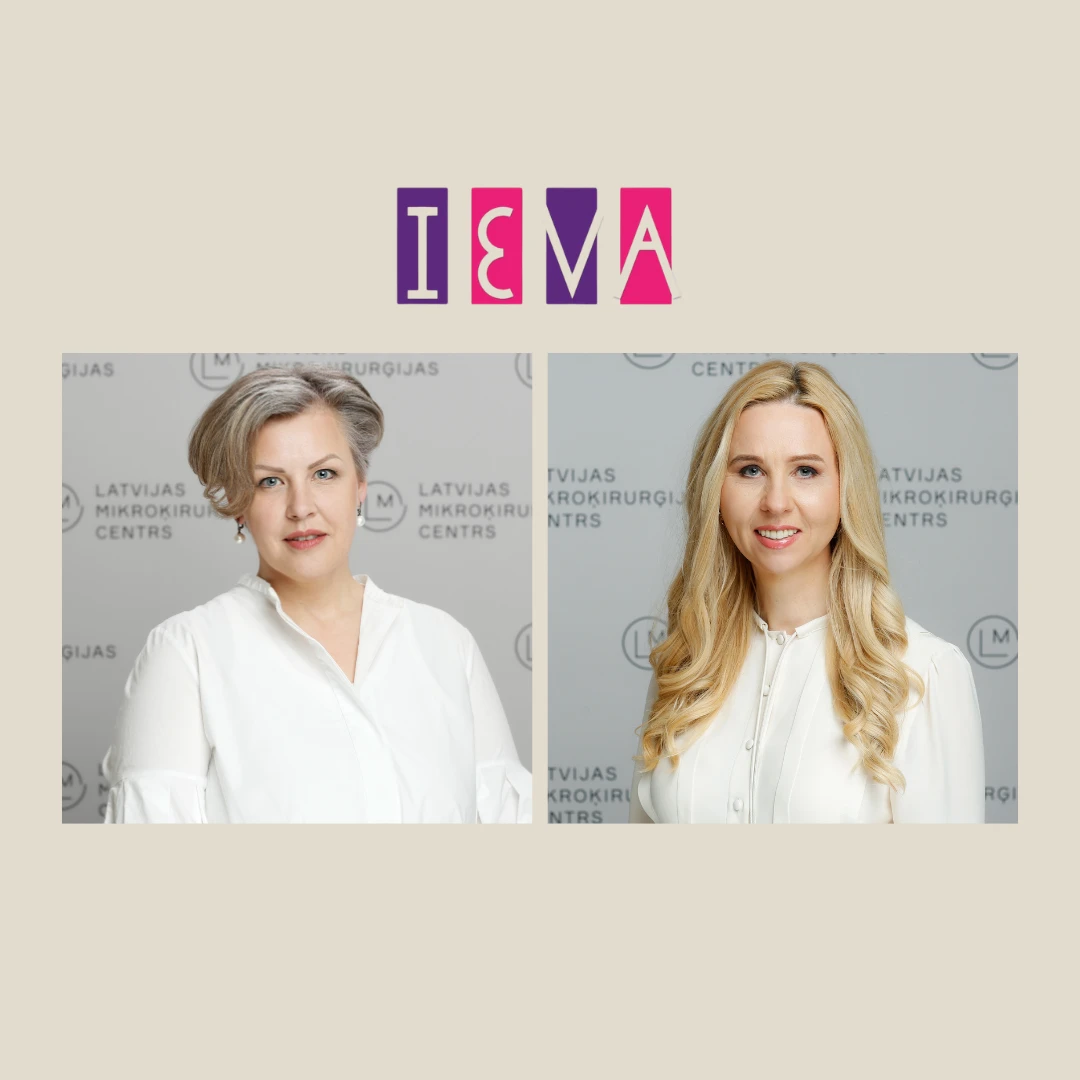
The enormous influence of social media and the fact that people have also become much more active in the virtual environment plastic surgeons, has significantly increased interest in facial plastic surgery. Unfortunately, there’s another side to this coin. We’ll explain what you need to know when preparing for it and how to navigate the vast array of options. Consult Plastic surgeon Anda Gaile.
The year doesn't matter
A woman’s decision to undergo facial plastic surgery is most often made either after a long period of mulling it over or after a sudden realization upon seeing herself in a video or photograph. This is followed by a sudden resolve: “Yes, I want to do this!”
The age at which one should undergo surgery is not an objective measure, since everyone ages differently—both in terms of time and with regard to specific areas of the face. Therefore, on the one hand, one can agree that plastic surgeon The view that a facelift should be performed when the patient feels it is necessary—for example, when the cheeks and forehead have sagged, the facial contour has changed, or signs of aging are visible on the neck. On the other hand, however, one cannot ignore the enormous influence of social media on people’s minds— plastic surgery, which just a few decades ago was a decidedly low-key area, has now effectively taken center stage. People have become active on social media sites surgeons, ...who are trying to sell their own products directly; as a result, even young women—for whom there is no objective justification—often want to undergo facelifts, which are the most invasive method of improving one’s appearance. For this reason, the necessity of surgery is objectively assessed during the initial consultation—it is possible that the desired result can be achieved through much gentler, non-surgical methods.
What exactly is a facelift?
It is a misconception that facial plastic surgery involves stretching the skin, cutting off the excess, and sewing it back together. In that case, the effect would be short-lived, because the skin is an organ that stretches very easily. If there isn’t a solid foundation underneath it, the skin will simply sag downward again, just like a pair of stockings. That is why a facelift is a serious surgical procedure lasting several hours, during which, first and foremost, the subcutaneous tissues, muscles, and ligaments that have sagged over time are lifted and repositioned where they used to be. If the volume of the tissues has decreased, they are augmented with the patient’s own fat tissue or, if that is not possible, hyaluronic acid filler injections are used. The procedure also includes a brow lift, upper lip lift, eyelid surgery, and neck rejuvenation. Only then is the excess skin addressed.
A Promising Method or Marketing Hype?
Practicing doctors are currently facing challenges due to the fact that, even in medicine, as a result of being viewed through the lens of very aggressive marketing, a vast number of new plastic surgery related terms. Confusion among patients stems from a wide array of newly coined terms that actually refer to the same good old classic surgical and procedural methods that doctors have been using for many years. As a result, doctors have to explain much more than before what each term means and why not every method is suitable for everyone. This wave of relatively new terms most often originates in Eastern countries and creates the misleading impression that there are new, effective methods that aren’t used here. It’s true that 20 years ago, no facelift was performed the way they are today. However, the basic principles of the surgery are essentially the same; only a few technical nuances have changed, which are applied depending on the patient’s specific needs. The biggest plastic surgery A marketing myth is the so-called “scarless facelift”—a procedure in which an incision is made in the hairline. First, it cannot achieve results comparable to those of a classic facelift; second, you must be aware that hair may fall out or become significantly thinner at the incision sites. Meanwhile, the so-called “krugovaya podtyashka,” or circular facelift, although a time-honored method, is often presented today as an absolute novelty. In fact, it is a full-spectrum facelift that addresses the eyelids, eyebrows, the lower third of the face, and the neck. Similarly, the so-called ”bullhorn”—or surgical upper lip lift, performed via an incision under the nose—is new only in name; this procedure has been performed for many years. There’s another enticing term: “liquid facelift.” It’s a new, promising name that essentially refers to nothing more than visual facial correction using Botox and filler injections.
Therefore, when following a seemingly progressive doctor on social media, you should critically assess whether, in trying to sell his own services, he is essentially talking about long-established methods that are actually performed by any practicing surgeon. Similarly, the safety and true value of so-called “trendy” methods must be critically evaluated.
If we’re talking about trends, however—now that stiff, over-stretched faces are a thing of the past and the entire field of beauty is moving toward results that look as natural as possible—the “deep plane” facial plastic surgery technique is popular. During this procedure, surgeon It lifts and reposition the superficial facial muscle complex in a specific way. There’s nothing magical about this method, but it has become popular because it produces very natural-looking results. That said, this method (like some others) is definitely not suitable for every case, so when you go in for your first consultation, be prepared to walk out of the office with a completely different plan proposed by the doctor.
How do you find the right one?
Find Your Own plastic surgeon It's almost like finding your own psychotherapist—talking it over and seeing if there's a connection. That mutual "click" is very important for the relationship between the patient and surgeon A good working relationship, based on mutual trust, would develop. The patient trusts that the doctor will do everything within his power, while the doctor trusts that his recommendations to the patient will not remain merely on paper. If the doctor realizes during the consultation that the patient isn’t listening or is trying to make excuses, the surgery will most likely be postponed, as there is no confidence that the partnership will be successful. The outcome of the surgery depends to a very large extent on how well the patient follows the doctor’s recommendations. It is essential to understand—plastic surgery involves risks and to a surgeon, When counseling a patient, one must ensure that, when discussing possible complications, the patient does not shut down and refuse to hear anything about them, but instead takes this information as seriously as possible. And then, if such complications do arise, the patient will trust the doctor and follow his or her recommendations, because each one is well-founded.
Inconveniences to Expect
Three weeks after the surgery, your face will still be swollen and have some bruising. The first stitches are usually removed after a week, which coincides with the time when the swelling begins to subside. There are cases where, after just three weeks, the face looks good enough to go out in public, but generally speaking, the recommended recovery period is three to four weeks (though this doesn’t mean the woman spends that time confined to her home), after which most patients are able to return to work and their daily routines. There may still be very slight swelling after a month, but the small wounds will have already healed. True, the scars will be pink, but not so prominent that they cannot be concealed with makeup. The full results will be visible after about six months, and they depend largely on the woman’s lifestyle, as well as how carefully she followed the doctor’s recommendations.
The results are also influenced by additional procedures performed after surgery. Starting as early as the second or third week, the doctor may recommend various methods, such as manual lymphatic drainage massage, which will speed up healing, bring the final result closer, and improve the woman’s well-being. Whether or not to undergo these procedures is up to the woman.
Let's talk about complications
It’s important to understand that doctors do everything they can to prevent complications, but patients must also follow all of the doctor’s recommendations. However, despite these mutual efforts, sometimes complications do arise and must be addressed. The most common and unpleasant complications of facial plastic surgery, which can cause very unpleasant side effects, are hematomas and excessive swelling. Hematomas—bleeding under the skin—are more common in patients with unstable or fluctuating blood pressure, as well as in those who resume physical activity too quickly during the postoperative period. Hematomas can lead to infection, and skin necrosis may develop over them; they can also compress a nerve, causing it to lose function and affecting muscle movement. However, these complications are usually temporary, as they last only until the hematoma is naturally reabsorbed and the nerve resumes its function. Swelling, on the other hand, is a normal reaction following any surgical procedure. That said, if for some reason the swelling becomes excessive, various problems may arise, such as lymphedema, which can lead to further complications. Of course, when discussing complications, doctors also take into account the so-called “gray area”—that is, situations that cannot be predicted in advance—when a patient’s body reacts in an individual way.
What will the result be?
The results will be more visually striking for women who have a lot of excess skin and pronounced facial sagging. If the signs of aging are minor, a facelift will give you a more rested, fresher, and healthier appearance. It’s important to realize that plastic surgeon It is not possible to change the quality of the skin—if the skin is neglected, dry, or sun-damaged, it will remain that way even after surgery.
Therefore, when considering facial plastic surgery, it’s important not to overlook skin care and a healthy lifestyle, because even after the procedure, the natural aging process will continue to take its course. The greater the skin’s potential, the longer-lasting the results of plastic surgery will be.
What should you definitely avoid doing before surgery? Get an excessive number of filler injections, have subcutaneous lifting threads inserted, or undergo deep facial tissue treatments using device-based technologies, such as radiofrequency procedures with needles. These “anti-aging” methods create subcutaneous scar tissue, which makes the outcome of the surgery less predictable and can lead to irreversible defects. If a woman smokes, ideally she should quit three months before surgery (vaping counts too!). All of this will be a worthwhile investment in a beautiful surgical outcome.
The magazine ‘Pērle.’.