LMC Media
Beautiful Breasts Even After Age 45+
May 20, 2026

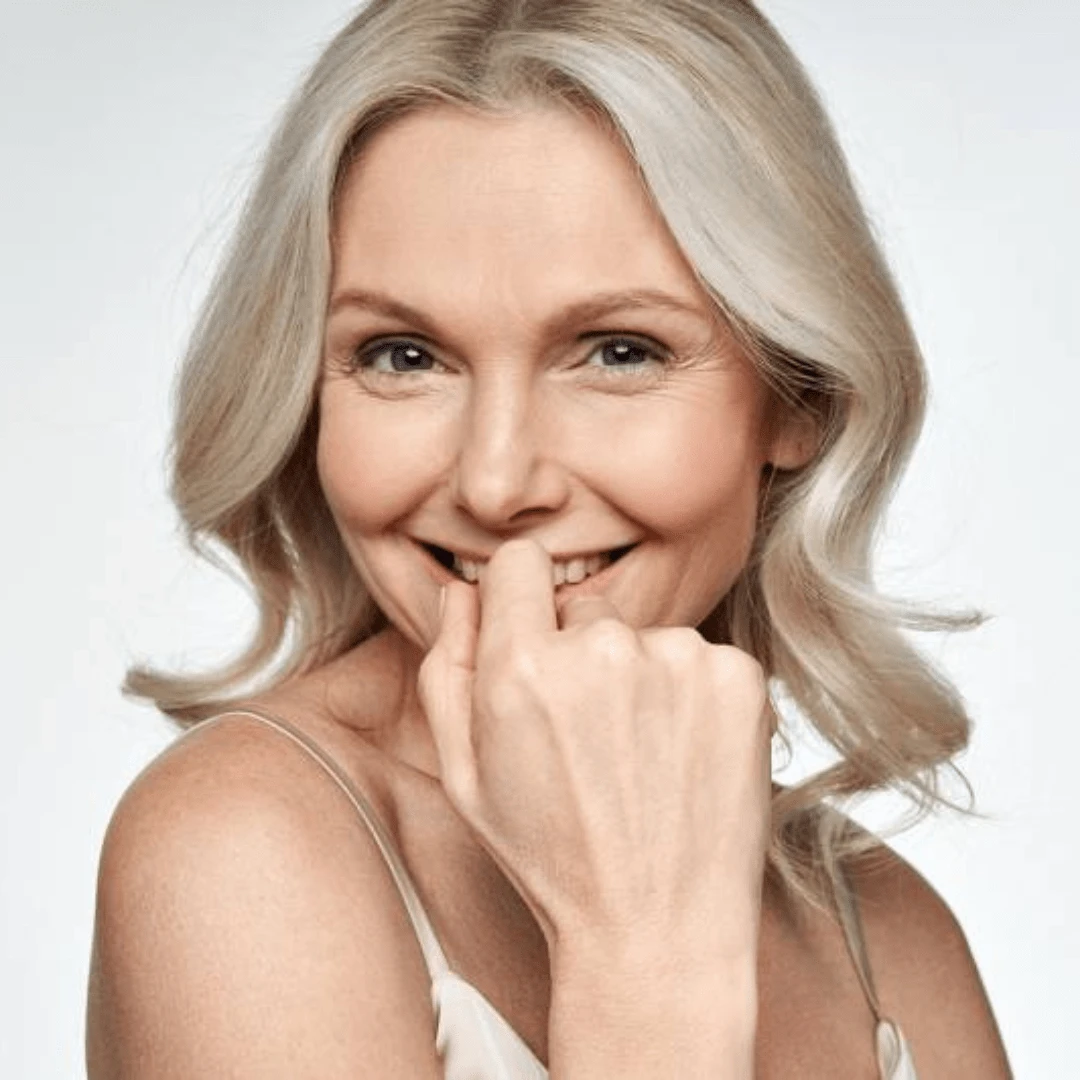
In the latest issue of “SANTA” magazine, Dr. Anda Gaile, a certified plastic surgeon, microsurgeon, and hand surgeon at our center, discusses blepharoplasty.
Sad-looking eyes with bags on the upper or lower eyelids make us look not only tired but also older than we are. How can we restore beautiful eyes and a lively gaze through blepharoplasty?
What is blepharoplasty?
Translated from Ancient Greek, “blepharo” means “eyelid,” and “plasty” means “eyelid correction.” This term is generally understood to refer to surgery to correct the upper or lower eyelids. However, for patients who think that it refers solely to eyelid correction, I usually explain that it can also be a broader concept. Specifically, it’s important to consider not only the eyelids but also the eyebrow and forehead area, since eyebrow drooping is also common. Anyone can see for themselves which area has sagged more by standing in front of the bathroom mirror. If there is a noticeable slope—a large, long, drooping crease extending from the middle of the eye to the earline— and the skin forming this crease is thick, it’s worth lifting the outer part of the eyebrow with your fingers to see if it’s actually the outer part of the eyebrow that has sagged. Eyelid problems, on the other hand, are usually more noticeable in women, because makeup accumulates in the delicate skin that folds when the eyes open and close. Therefore, it’s important to assess which problem is the primary one, and I explain to patients: if there is a tendency for the eyebrows to droop, it’s worth combining two procedures—both eyebrow fixation and repositioning to the desired position, as well as upper eyelid correction. It is essential to consult with a specialist who performs all types of facial plastic surgery, as they can offer this combination of procedures.
The same applies to the lower eyelid—if you notice any changes there, it’s best to see a specialist who performs all types of facial surgery, because people often cannot tell the difference themselves—whether changes in appearance are caused by alterations in the lower eyelid or in the middle third of the face—in which case correcting the lower eyelid alone will not be sufficient, but must be combined with a MidFaceLift.
Not just for beauty, but also for your eyesight
Changes in the eyelids affect people of all ages. However, as we age, both the skin of the eyelids and the underlying muscles lose their tone. When the muscles lose their tone, pockets of fat appear—puffy pads that bulge outward and are clearly visible. As a result, the excess skin of the upper eyelid sags over the eye, causing a feeling of heaviness and restricting the field of vision. Consequently, blepharoplasty has more than just a cosmetic effect—many patients report that they have also gained better and clearer vision after the surgery. Of course, the surgery does not correct vision problems—such as nearsightedness or farsightedness—but it does affect the field of vision and overall well-being.
As we age, the lower eyelids also lose their elasticity, and this is one of the reasons why our eyes water. Specifically, the eyelids no longer fulfill their protective function—they are unable to close tightly against the eye, allowing dust and wind to enter the eyes and causing irritation. During lower eyelid correction, the eyelids are tightened, which eliminates the symptoms of eye irritation. Consequently, it’s safe to say that by undergoing blepharoplasty, a person regains both their field of vision and a more youthful, vibrant, and energetic appearance. One could also say that this helps them reclaim their youth. However, this is not about the cult of youth, but about self-care—when we feel comfortable and like what we see in the mirror, our inner radiance changes, and so does the attitude of those around us.
Course of the Operation
The procedure can be performed under either local or general anesthesia. With local anesthesia—just like at the dentist—a medication is injected; the surgery is painless, and you can go home shortly afterward. With general anesthesia, the patient is put to sleep; recovery takes longer, but the patient still goes home the same day. Which type of anesthesia is better? The one that’s best suited for the patient. If you aren’t bothered by sounds or touch, local anesthesia is the better choice. If the surgery causes emotional distress, it’s better to choose general anesthesia. The surgery usually lasts between 30 minutes and an hour and a half, and during that time, simply put, both excess skin is removed and fat deposits are excised.
In turn, during the first two to three weeks after surgery, swelling and bruising are common, although some people do not experience them. Therefore, it’s recommended to take the first week off from work and other activities so you can rest and spend time at home. Over the next four months, there will be slight swelling around the eyelids; the tissue will feel firmer, and the scar will range from reddish to light pink. The full recovery period lasts up to six months, but by then you’ll already look great and be ready to get back to your wonderful life.
Taking care of yourself starts well in advance
Before the surgery, it is recommended to remove any false eyelashes, if you have them, and to refrain from smoking and using vapes for at least three weeks, as nicotine impairs healing. It is advisable to prepare cold compresses in advance, arrange your home so that everything is within reach and you do not have to bend over, and have clothing that is easy to pull over your head and shoes that are easy to put on, without having to tilt your head downward. For the first 24 hours after surgery, it is best to sleep with your head elevated and to apply cold compresses to your eyelids, as these help reduce discomfort and swelling, as well as minimize the extent of bruising.
SOURCE: “SANTA” MAGAZINE”