LMC Media
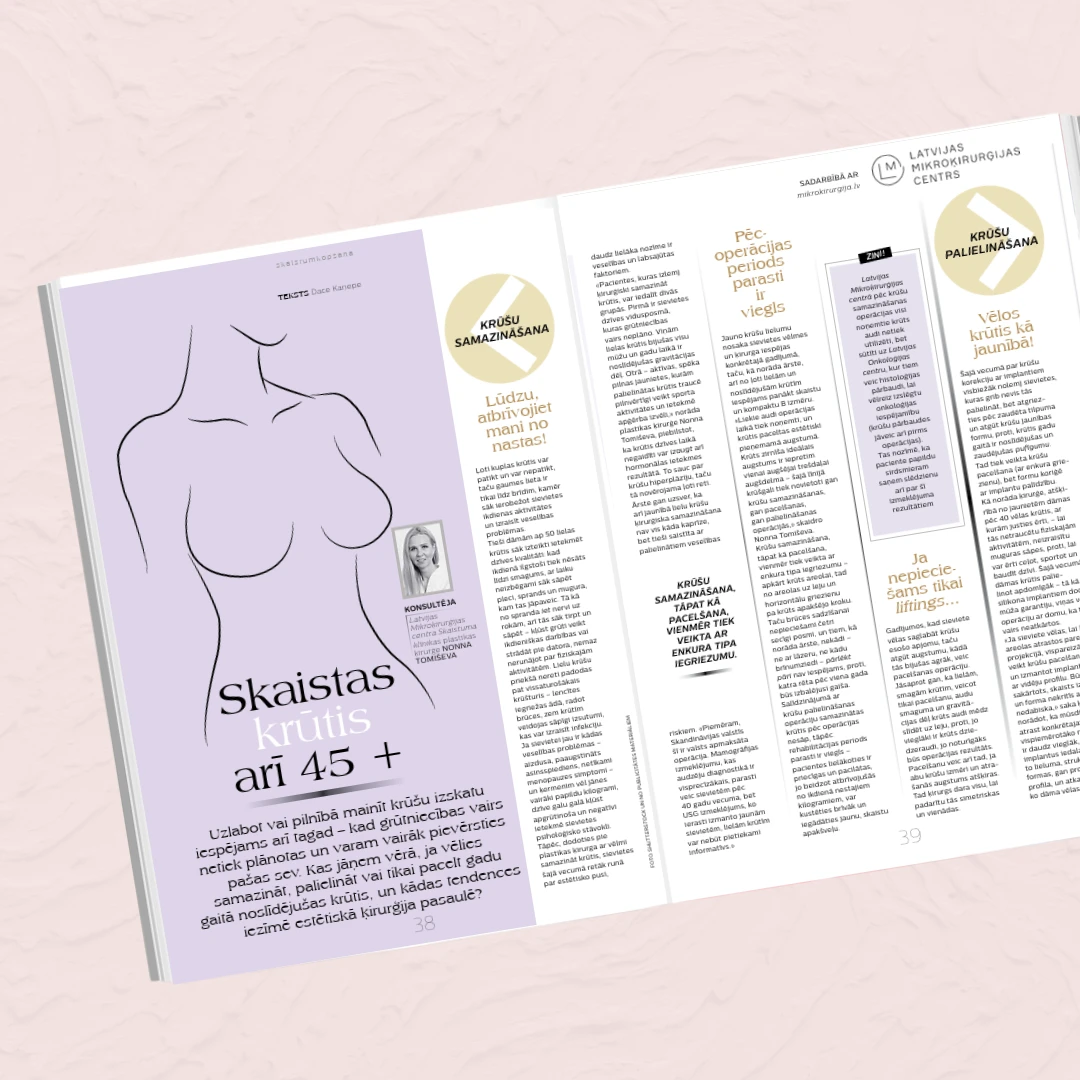
Beautiful Breasts Even After Age 45+
May 20, 2026
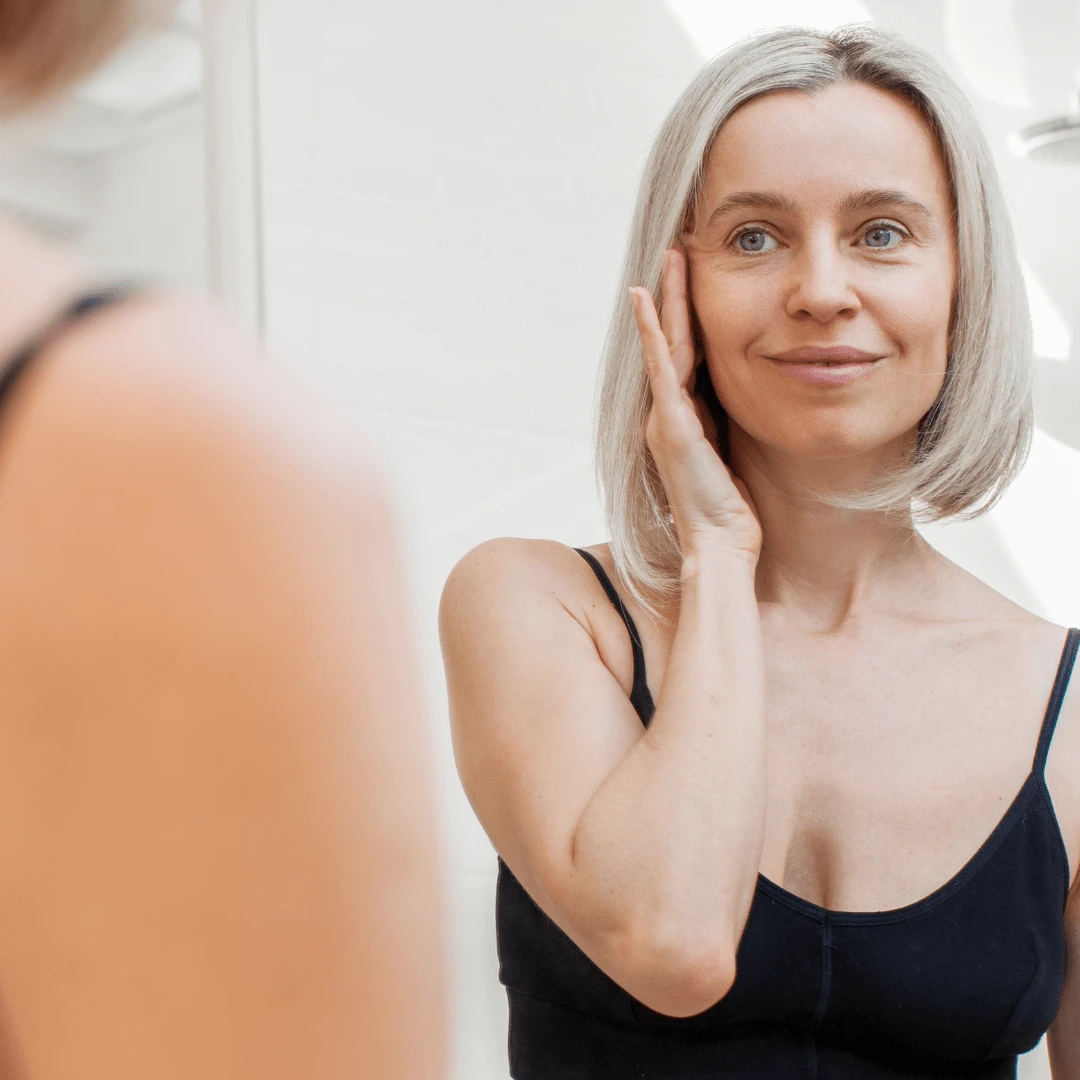
Looking in the mirror, noticing signs of aging, and feeling disheartened: this is natural, because we do care about how we look. While it’s impossible to fight the relentless passage of time, taking care of our appearance—and, by extension, our self-esteem—is very much within our reach. Nowadays, there’s a wide variety of treatments available to improve signs of aging such as wrinkles and sagging facial skin. One of them is a “facelift,” or facial skin lifting surgery. What is it, and what results can we ultimately expect? —we asked these and other questions of a board-certified plastic surgeon and hand surgeon who has been working at the Latvian Microsurgery Center since 2002, To Anda Gaile.
“A ”facelift” is a type of facial plastic surgery that is primarily intended to correct sagging tissue in the middle and lower thirds of the face,” explains Dr. A. Gaile.
“Let’s put it this way: for a while, a person can keep their facial tissues in great shape and looking radiant using injections. These can be Botox, they can be fillers, or they can be a combination with vitamins and amino acids, but as time goes on, unfortunately, the tissues inevitably lose their elasticity, and we observe that all facial tissues sort of lengthen and sag downward. The padding in our cheeks, which used to sit above the cheekbone, is suddenly a little lower.“Facelift” is a method that essentially takes the patient back about 15 years, lifting these tissues to where they once were in their youth. So a “facelift” is not intended to change a person’s facial features. We simply reposition them to where they were some 10–20 years ago, and in this way, without any additional substances, one can essentially regain a second, more radiant youth.If, as a person ages, fat pads are lost or the subcutaneous fat layer is significantly reduced, lipofilling can also be performed—which involves transplanting the patient’s own fat tissue from another area to the face.”
“After the surgery, the patient can expect a reduction in the number and depth of both fine and deep wrinkles. The “bulldog cheeks”—or sagging tissue along the jawline—have disappeared; volume has been restored to the cheek area; the angle of the jawline has been improved; and deformities of the platysma muscle in the neck area have been corrected. It is important to understand that a “facelift” is a surgical procedure in which we reposition tissue. What a patient cannot expect is that, as a result of this surgery, the skin will change its structure—it will not become less oily or less porous, nor will it become the opposite. So, if there were small wrinkles, they will, of course, be smoothed out by tightening the skin, but the skin itself will not change in terms of its nature and structure. Consequently, even after a “facelift,” patients must continue to care for their face and facial skin and improve its structure. This may involve facial creams, mesotherapy, vitamin cocktails, or fillers in small doses, but the basic idea behind a facelift is to reposition the tissues back to where they were in youth.“
“This is a very difficult question to answer. Our aging—how the structure of our face changes—depends to a large extent on our genetics, such as the skin type we’ve inherited. There are patients whose first signs of aging appear around the eyes. There are those who age more quickly in the lower part of the face. Any such characteristics are genetically inherited. We all surely know someone who, even at age 30, is still required to show ID when buying alcohol at a store because they still look very young. How quickly we age visually is related to genetics. Plus, it also depends on how we live, what our hobbies are, and what our lifestyle is like. For example, some women really enjoy sunbathing, and as a result, signs of aging appear on their skin sooner. While the skin can tolerate this at age 18 and the effects aren’t visible, by around age 35, the changes caused by this habit become very pronounced, and the skin is no longer able to regenerate. This also applies to exercise. One study found that running is a form of exercise that accelerates aging, since it is done in the sun, rain, and wind. The vibrating motion of running also affects the skin. Our facial skincare habits, what we eat, and weight fluctuations over the course of our lives—the signs of aging are influenced by a great many factors, so this age threshold must be determined individually for each person.”
You mentioned that a “facelift” makes a person look 15 years younger. What happens after that?
“Yes, a facelift makes a person look, on average, 15 years younger, but that doesn’t mean the surgery stops the aging process. It, of course, continues. Plastic surgeons have noted, however, that it’s not the case that 15 years after plastic surgery, a person will look exactly the same as they did on the day of the surgery. It has been observed, however, that the results do last much longer. So, in reality, we both restore youth and slightly slow down the aging process, and that is a great benefit for the patient.”
“Once everything has healed, you can see satisfaction and happiness on the patient’s face. It could be compared to breast augmentation surgery. If a woman has had small breasts her whole life and has decided to undergo breast surgery, the benefit is indescribable. She stands up straighter, is self-confident, and satisfied with herself and her appearance. The same is true after a facelift. They are indescribably happy. My most recent patient said she didn’t understand how to make the rest of her body match her new face. That’s exactly how important it is to a woman!“
“The true results become apparent after several weeks, once everything has healed. During the postoperative period, it’s quite difficult for patients to wait for the moment when they’ll see the appearance they were hoping to achieve. It takes several weeks for the body to recover. It’s normal that after any plastic surgery—including a facelift—patients feel down, anxious, and somewhat impatient for a couple of weeks; because they want to see the results right away, but there’s still swelling, and maybe some bruising. That’s the hardest part of the process. Once the recovery period is over and the patient sees the results, people are very happy again. That’s exactly when that true sense of happiness sets in, restoring women’s self-love, satisfaction, and a more beautiful, happier life.”
If you'd like to experience this true sense of happiness, too, schedule an appointment with Dr. Anda Gaile. To learn more about the options, procedure, and costs of a “facelift” or facial skin lift, click here Latvian Microsurgery Clinics on the website.